
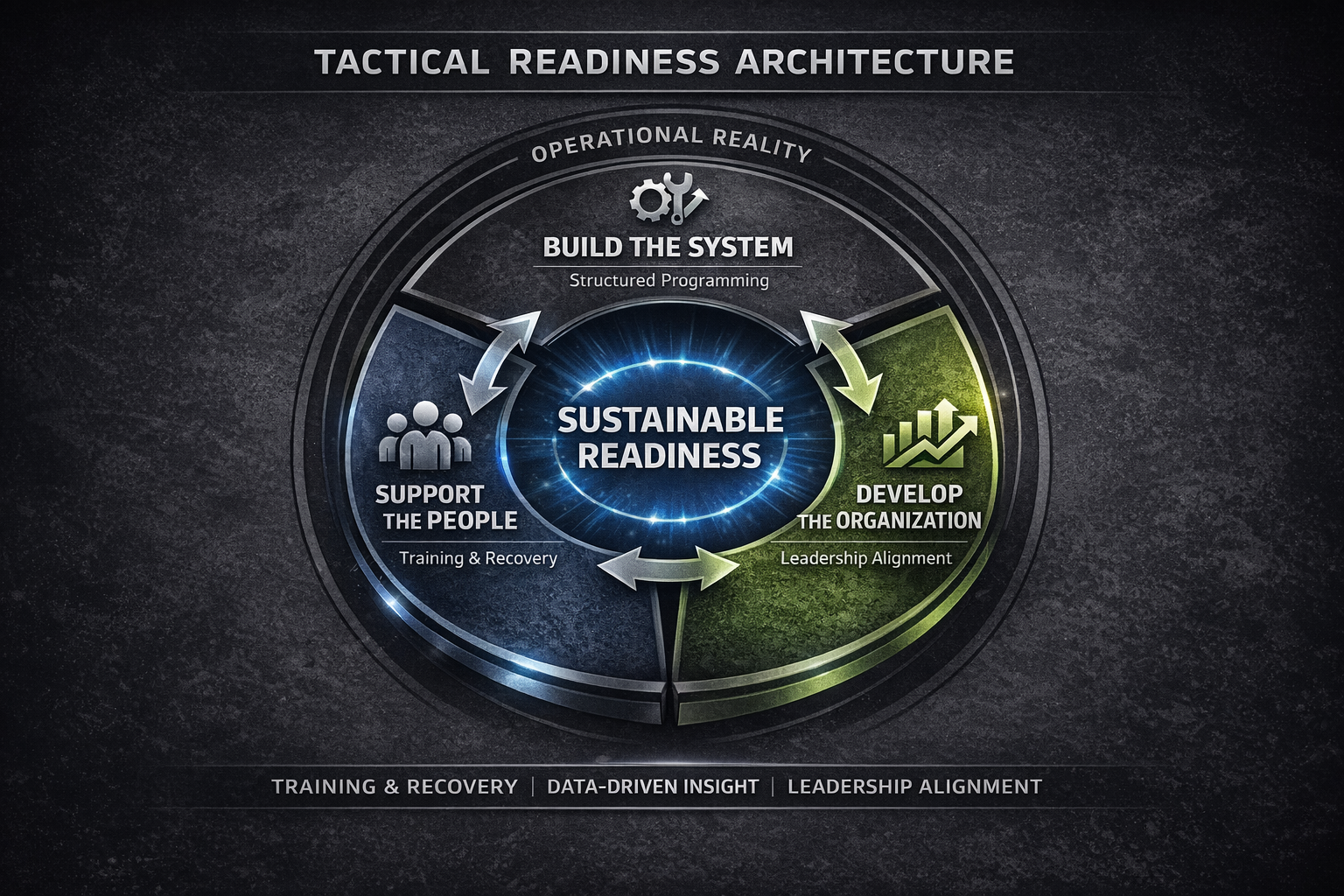
The FrontLine Readiness Model
Build the System
Structured Readiness Architecture
These performance pillars focus on creating the foundation that supports long-term operational readiness.
Structured Readiness System Design
Building integrated human performance systems aligned with operational realities and long-term goals.Department Implementation & Ongoing Support
Establishing consistent structure that reaches every shift, station, and schedule.Readiness Monitoring & Data Visibility
Using performance and wellness data to guide training, recovery, and injury prevention decisions over time.
Support the People
Performance & Recovery Strategy
These core performance areas support the day-to-day performance, durability, and health of first responders.
Tactical Strength & Conditioning Strategy
Performance programming designed for continuous readiness — not seasonal training cycles.Recovery, Sleep & Fatigue Management
Strategies to manage workload stress, support recovery, and reduce long-term performance decline.Nutrition & Lifestyle Performance Support
Practical guidance to support energy, resilience, and operational performance.
Develop the Organization
Leadership & Performance Education
Helping departments build long-term culture, shared understanding, and sustainable readiness practices.
Leadership Education & Strategic Workshops
Supporting command staff and leadership teams in understanding how to implement and sustain effective readiness systems.Tactical Human Performance Education
Workshops designed to translate human performance science into practical, job-relevant application.